

The Holiday Discount Trap: How to Market Value Without Training Customers to Wait for a Sale
Your holiday campaign brings in a wave of orders. Your team works overtime to meet demand. But when you review the numbers, you wonder why all that activity generated so little profit. Welcome to the holiday discount trap: a busy business giving away the very margin it needs to thrive.
You want customers to choose you during the holidays, and feel good about paying full price afterward. A sustainable holiday marketing strategy starts with three core decisions: what your customer needs, what you can profitably provide, and why buying right now makes sense.
More Holiday Sales Do Not Always Mean More Profit
Revenue gets the applause. Profit pays the bills. Consider a simple example: you sell a product for $100 with $60 in direct costs, leaving a $40 margin before overhead. Discount that product by 20%, and you collect $80 while your direct costs stay at $60. Your profit margin drops to $20. You now have to double your sales volume just to generate the same profit dollars, before factoring in extra advertising, overtime pay, or shipping expenses.
A price reduction makes sense when clearing excess inventory or filling unused capacity. Otherwise, give every promotion a defined job, a spending cap, and a strict end date. Before approving an offer, ask: What do we actually keep from each sale after factoring in the total cost of delivery?
What Constant Discounts Teach Your Customers
Customers pay attention to patterns. If every holiday, weekend, and mildly interesting Tuesday brings another markdown, waiting for a sale becomes a sensible buying strategy.
In its 2025 article on promotional pricing, HubSpot warns that frequent promotions lead customers to “expect lower prices consistently.” Constant promotions train customers to view your regular prices as negotiable.
Review your last six campaigns. Did they attract new buyers, or did existing customers simply wait to make their usual purchases during sale periods? Are prospects asking about the next discount before considering your value? Those answers reveal far more about your brand health than a busy checkout line ever will.
The Hidden Business Costs of Competing on Price
Repeated discounting erodes brand perception. Premium expertise becomes difficult to justify when your loudest message is always a markdown.
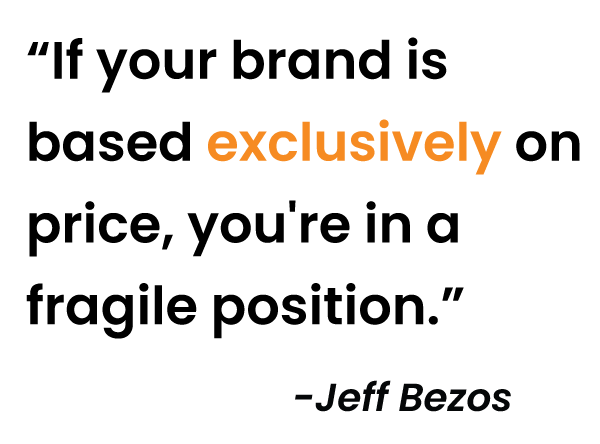
Then there are the operational tolls: rushed appointments, delayed responses, exhausted employees, and compromised client experiences. That relationship matters most when a promotion succeeds. If your operational team cannot comfortably fulfill spike demand, adjust the offer before your customer service suffers.
Sell the Value Before Promoting the Offer
What is your customer actually buying?
A holiday shopper wants confidence that the recipient will love the gift. A homeowner preparing for guests wants one fewer unfinished project. A business owner wants reliable support before a hectic year-end. Highlight that core outcome before introducing any seasonal bonus. For example:
“Choose a locally curated gift, beautifully wrapped and ready for pickup before your office celebration.”
That single message gives the customer multiple reasons to buy: thoughtful selection, presentation, and a deadline handled. Your brand messaging should make those benefits obvious. Specific promises help customers judge whether your offer is worth its full price.
Related: Small Audience, Strong Influence: Why Local Experts and Micro-Creators Matter
Create Holiday Offers Without Cheapening Your Brand
Build your offer around a seasonal pain point your customers already face.
- A local boutique can feature ready-to-give gift collections organized by the recipient.
- A salon can package a high-end treatment with essential aftercare products.
- A B2B service provider can offer a defined preparation package with a fixed scope and scheduling window.
Set prices after calculating materials, labor, administration, and fulfillment costs. Use scarcity only when it reflects a real limit: appointment capacity, production time, or inventory. Communicate it honestly. “Twelve appointments available before December 20” provides useful urgency, provided twelve is the genuine limit. An endlessly resetting countdown timer only teaches customers to distrust your brand.
Use Bundles, Bonuses, and Convenience Instead of Deep Discounts
Value-based holiday offers drive sales without degrading your baseline pricing. Consider these high-value alternatives:
- Bundles: Combine complementary products or services around a unified customer goal.
- Bonuses: Include a relevant extra with a low marginal delivery cost.
- Convenience: Offer gift wrapping, priority pickup, or streamlined scheduling.
- Loyalty benefits: Give returning customers exclusive early access or priority reservations.
- Experiences: Include a personalized consultation, product demonstration, or white-glove handoff.
McKinsey’s report highlights a growing demand for convenience, driven by a “bring-it-to-me mindset.” For your holiday campaign, ask: What friction or effort can we remove for the customer?
Track the cost of every added perk. Free delivery and bonus consultations still require real resources. A bundle protects profitability only when its price covers everything promised.
Turn Seasonal Buyers Into Long-Term Clients
The customer relationship really begins after checkout. Send clear onboarding instructions, explain next steps, make support easy to access, and request feedback once the customer has experienced the purchase.
“There is only one boss. The customer.”
– Sam Walton
If you want repeat customers, assign a team member to follow-up workflows and schedule them into your post-holiday pipeline.
Your website and booking flows should make subsequent purchases effortless. Customers shouldn’t have to wade through expired holiday banners to find your core services and regular pricing. Give them reasons to return that extend well beyond seasonal promotions.
Protect Your Brand After the Promotion Ends
End your offer precisely when you said you would. Remove expired promotional banners, restore regular pricing, and make no apologies for it. Then analyze contribution margin, fulfillment costs, customer feedback, and repeat purchase rates at full price. Use campaign tracking to confirm whether you gained profitable, long-term business or simply shifted existing demand into a discounted window.
Your next step is simple: choose one customer problem, build one well-structured offer, and verify the unit economics before launching. You can run effective holiday campaigns while protecting the profitable business you worked hard to build.
Related: Marketing Metrics That Actually Matter in 2026
If you need help shaping a holiday offer that customers love and your team can smoothly deliver, Power Marketing SF is here to help you build a profitable strategy.